
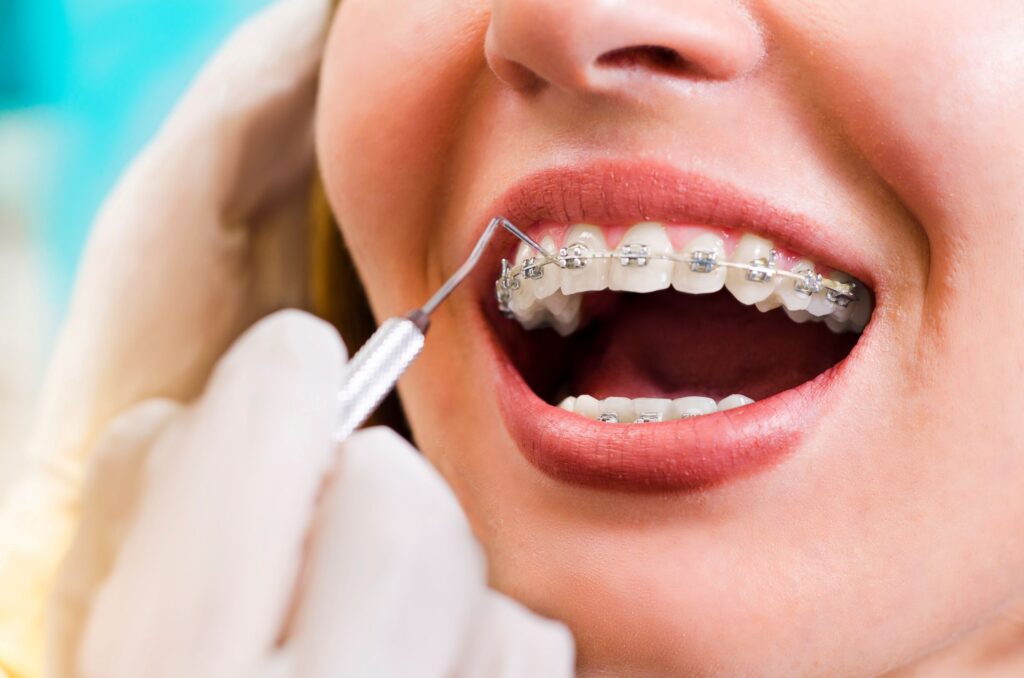
If you’re feeling self-conscious about gapped or crooked teeth, you might try not to smile to avoid being judged. Thankfully, many dentists offer traditional orthodontics to straighten even the most severe dental and bite misalignments.
But if your teeth start to feel loose with braces on, you might worry that your treatment has gone off the rails. It’s normal to feel concerned, but rest assured, the metal brackets and wires are unlikely to dislodge your teeth! Continue reading to learn more about why they might feel unstable and what you can do to ease associated discomfort.
How Do Traditional Braces Work?
Standard orthodontics are the tried-and-true solution for straightening smiles and have a long history of success. This service relies on metal brackets, which are cemented to the fronts of your enamel. These are then threaded with an adjustable archwire to exert consistent pressure to shift your teeth to their ideal places.
It often takes anywhere from 12 to 36 months to complete treatment. Then, once the brackets are removed, you’ll likely to required to wear a retainer to help prevent them from reverting to their starting places immediately afterward.
Why Do My Teeth Feel Loose with Braces?
Many people tend to think of their teeth as immovable structures in their mouths, but the truth is that they’re held in place by tissues, ligaments, and muscles that have a capacity for movement. This is what allows orthodontic services to shift them from one position to another.
However, you might start to worry if you’ve noticed that one or more of your teeth seem wobbly or destabilized throughout your treatment. It’s natural to feel concerned, but this is a normal part of the process. The looseness often results from the stretching and compressing of the different materials holding your tooth in place as it moves.
How Can I Address Associated Aches from Braces?
In addition to a destabilized sensation, many patients also experience tenderness or throbbing as a result of orthodontic treatment. If you’re hurting, you can try taking over-the-counter medications, such as ibuprofen or acetaminophen, to reduce pain and inflammation. You might also hold an ice pack to the sore side of your face for 15-minutes at a time can temporarily numb the area and provide some much-needed relief.
If you notice persistent or ongoing issues, like wobbly or sore teeth, contacting your dentist for an appointment can provide some much-needed peace of mind!
Meet the Author
Dr. Christina Herrera takes pride in helping improve her patient’s lives by enhancing their dental health. She earned her Doctor of Dental Surgery from the University of Oklahoma before completing a year-long general practice residency at Michael Reese Hospital in Chicago. Today, she provides a full menu of 5-star services, including traditional braces, to meet your oral healthcare needs conveniently under one roof. You can request an appointment on the website or by calling (408) 378-8773.